
Three Student Support Centres for Students with Disabilities, a National Strategy, and sustainable cooperation among the main outcomes of the project
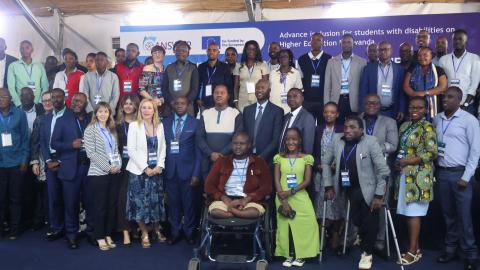
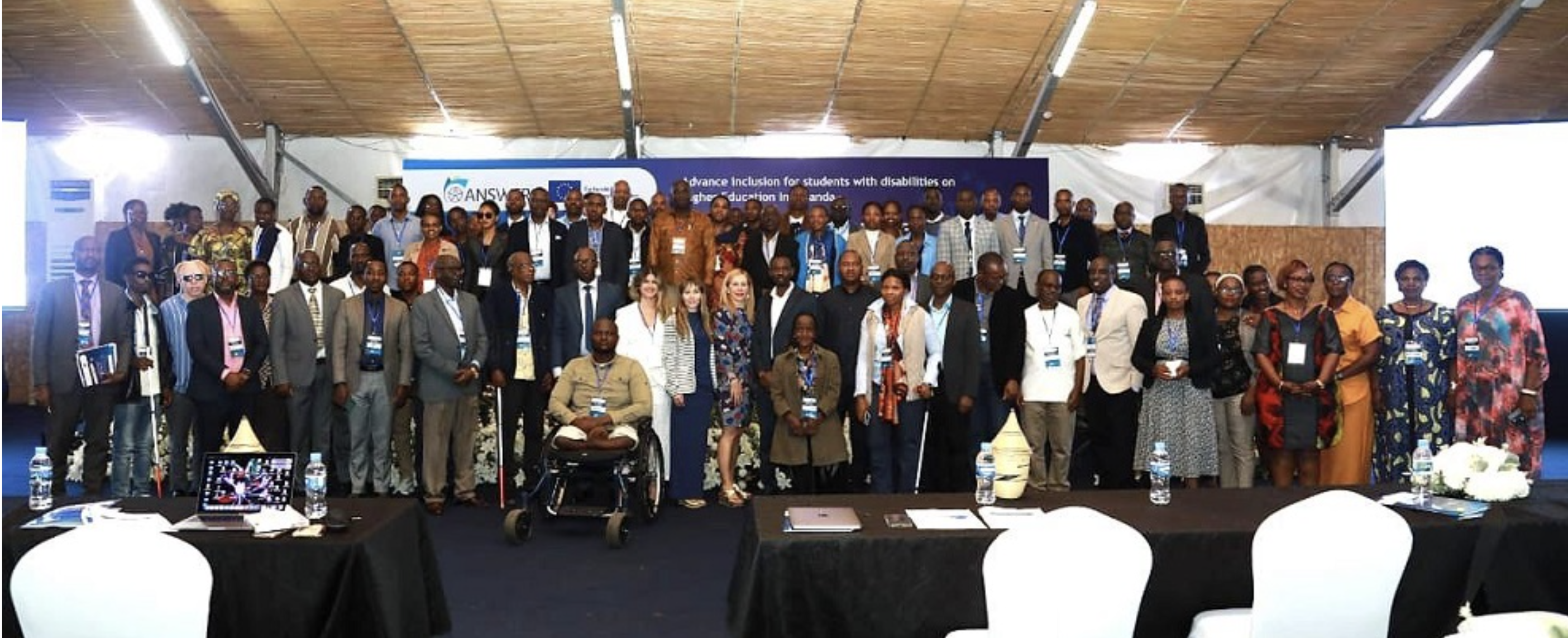
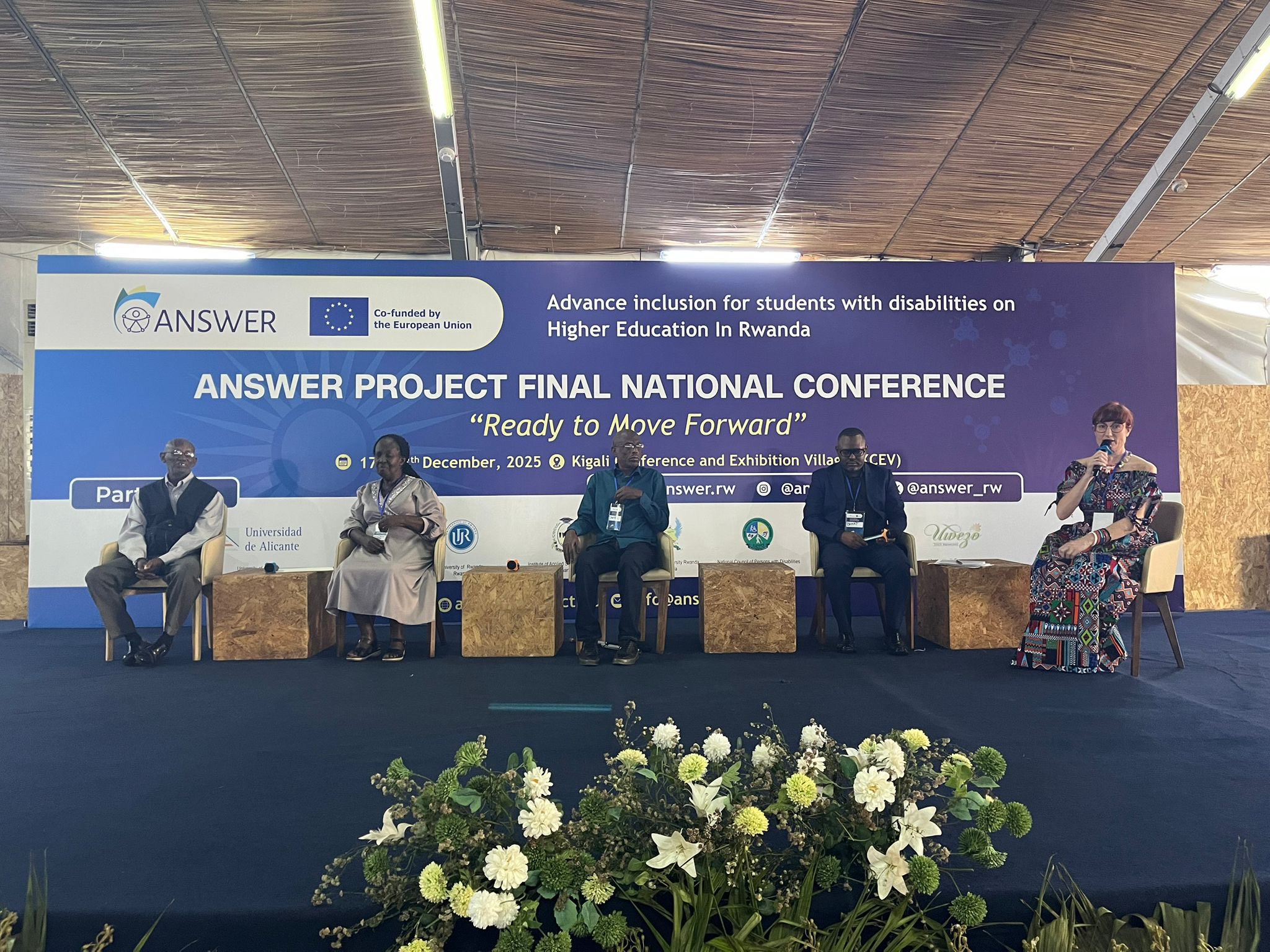
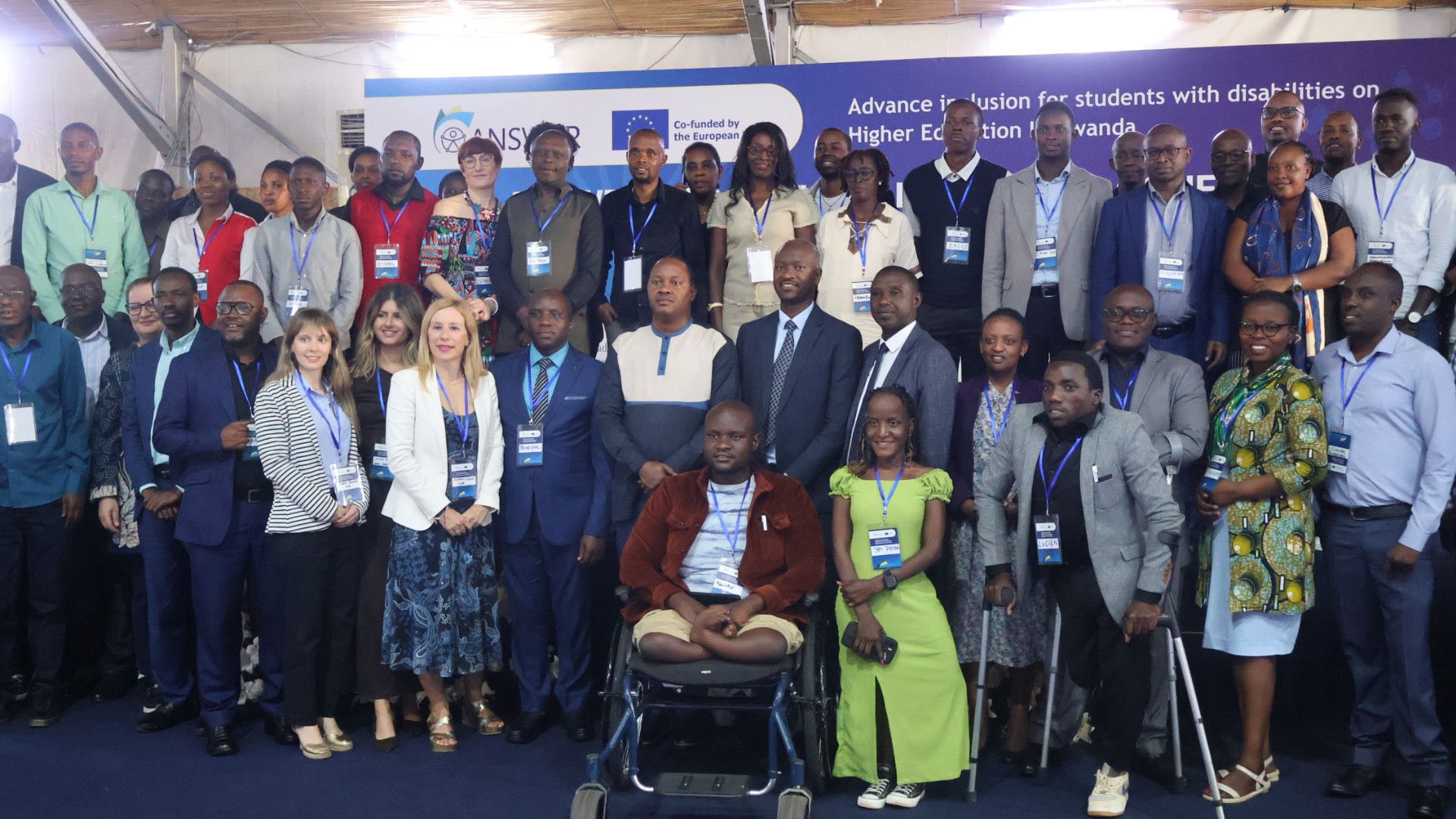
The ANSWER – Advance Inclusion for Students with Disabilities in Higher Education in Rwanda project held its Final Conference on 17 and 18 December 2025 in Kigali, Rwanda, under the motto “Ready to Move Forward”, preceded by the consortium management meeting on 16 December. The event served to showcase the final results and the sustainable impact of an initiative that will officially conclude in February 2026.
The conference brought together approximately 140 participants, including ministerial representatives, university leaders, academic and administrative staff, organisations of persons with disabilities, students, private sector representatives and other key stakeholders from the education ecosystem. Discussions focused on the sustainability of project outcomes, the strengthening of institutional partnerships, and the need to continue moving forward in a coordinated manner towards more inclusive and accessible higher education systems.
One of the project’s most significant achievements has been the establishment and institutionalisation of three Student Support Centres for Students with Disabilities within Rwandan universities. These centres have been conceived as stable and permanent services aimed at ensuring access, retention and academic success for students with disabilities. They have been equipped with specialised resources and assistive technologies, and their design is based on the transfer of the Student Support Centre (CAE) model of the University of Alicante, adapted to the Rwandan context.
The project has also represented a structural advancement within the national higher education system, combining the creation of support services, institutional capacity building and alignment with public policies. In this context, the Final Conference featured the presentation of a proposed National Strategy for the implementation and monitoring of disability inclusion in Higher Education in Rwanda, establishing a shared framework for its effective and long-term integration into university policies.
As the coordinating institution, the University of Alicante through its Institutional Project Management Office (OGPI) has played a central role in both the technical coordination of the project and the delivery of specialised training for university staff, in close collaboration with the University of Macedonia as a European partner. This capacity-building programme has focused on ensuring the quality, professionalisation and sustainability of the services developed for students with disabilities.
Testimonials shared during the event highlighted the social impact of the project, demonstrating significant improvements in access, participation and support for students with disabilities. Furthermore, consortium institutions reaffirmed their commitment to maintaining collaboration beyond the formal conclusion of the project, exploring new avenues for cooperation and the transfer of the model developed to other countries and contexts.
About ANSWER
The ANSWER project, co-funded by the Erasmus+ programme of the European Union, aims to provide Rwandan universities and educational stakeholders with the knowledge, skills, and tools needed to bridge the gap between policy and practice in inclusion and accessibility.
Coordinated by the University of Alicante (Spain), ANSWER brings together a consortium of key partners in Rwanda and internationally. Among them are the University of Rwanda, East African University Rwanda and the Institute of Applied Sciences INES-Ruhengeri, contributing expertise in university management; the Ministry of Education and the National Council of Persons with Disabilities, ensuring alignment with public policies; as well as the University of Macedonia (Greece) and the NGO UWEZO Youth Empowerment, providing expertise in inclusive education and civil society participation. Together, they work to transform Rwandan higher education into a more accessible and inclusive space.
More information and updates on social media: Instagram, Facebook, X, and YouTube.